- Dressel 2-4 Koan Amphora [permalink]
- Type
- Typology Item
- Not after (date)
- 175
- Not before (date)
- -50
- See also
- https://archaeologydataservice.ac.uk/archives/view/amphora_ahrb_2005/details.cfm?id=95
- Broader
- Amphora
- Typological identification comment
- Also classified as Callender 2 and Peacock & Williams Class 10.
- Bibliography
- Grigoropoulos2022, pp. 41-46 (Halasarna, Kos)
- Bibliography
- Hesnard1986 (Rhodes and Kos)
- Bibliography
- Panella1986 (Ostia)
- Description
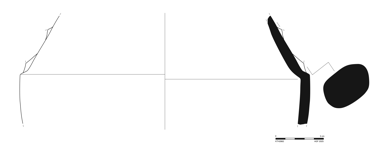
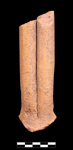
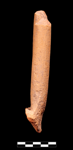
- A popular Late Hellenistic to Early Roman form for transporting wine that developed from the earlier Hellenistic type. Tall cylindrical body with a very short, point toe, a tall sloping shoulder, a tall cylindrical neck with a plain, rounded rim, and tall, bifid handles with a rounded peak. Format reproduced in many regions of Mediterranean (q.v.) Examples found on Kos display distinct but related fabrics from light red to yellowish red or orange, fine and hard, with varying amounts of quartzite, red and black inclusions, limestone chunks, and golden mica. Dated contexts point to production from late 1st century BCE to mid-/late 2nd century CE, with somewhat later variants. Related to ‟sub-Koan” or Dressel 5/Knossos 19.
- Has geographic origin
- Kos
- Belongs to Historical Period
- Early Roman (Historical Period)
- Belongs to Historical Period
- Late Hellenistic (Historical Period)