KE 1788 (Early Byzantine North African Lamp) [permalink] [next]
Type
Inventoried Object
Technique
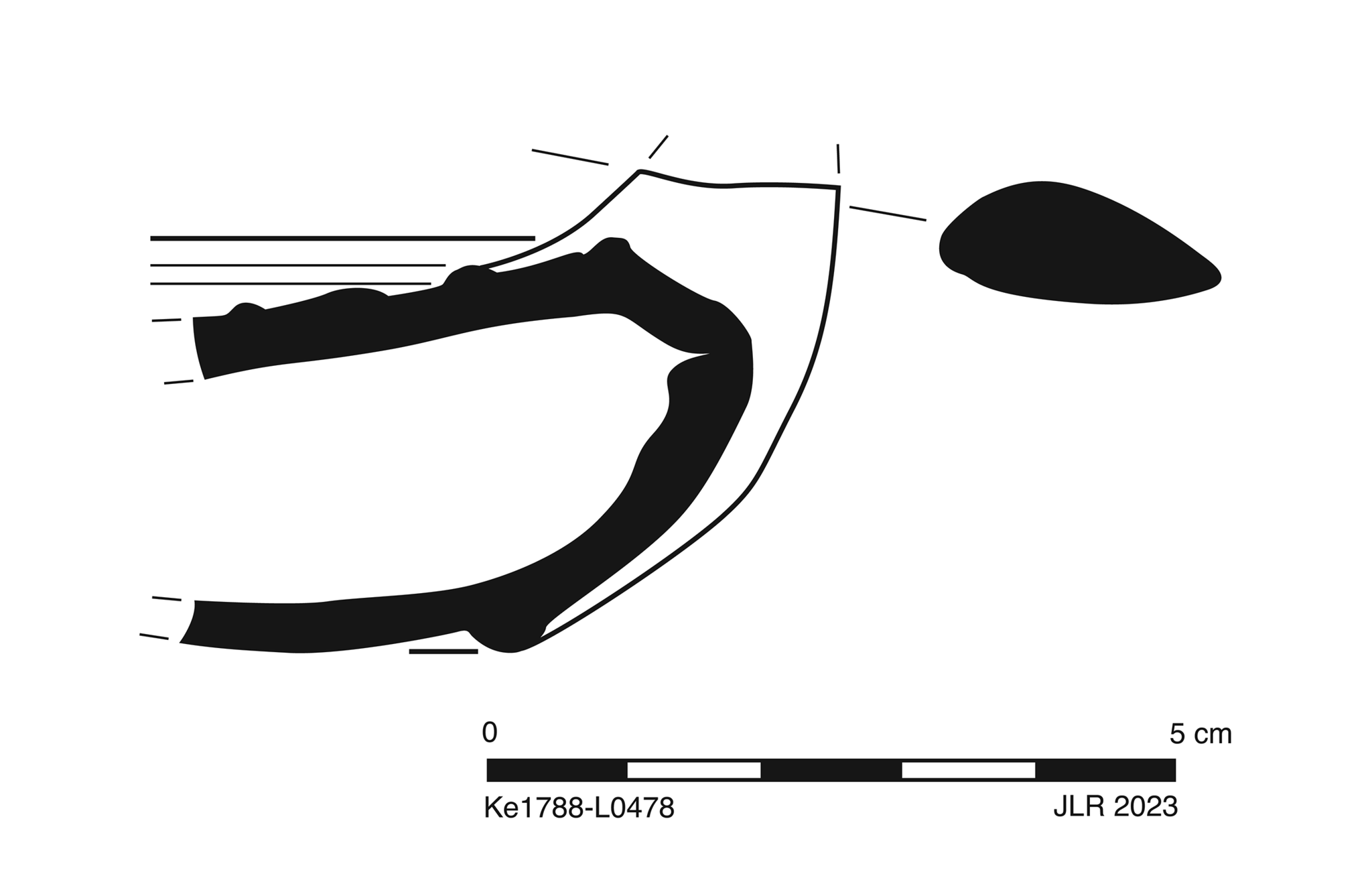
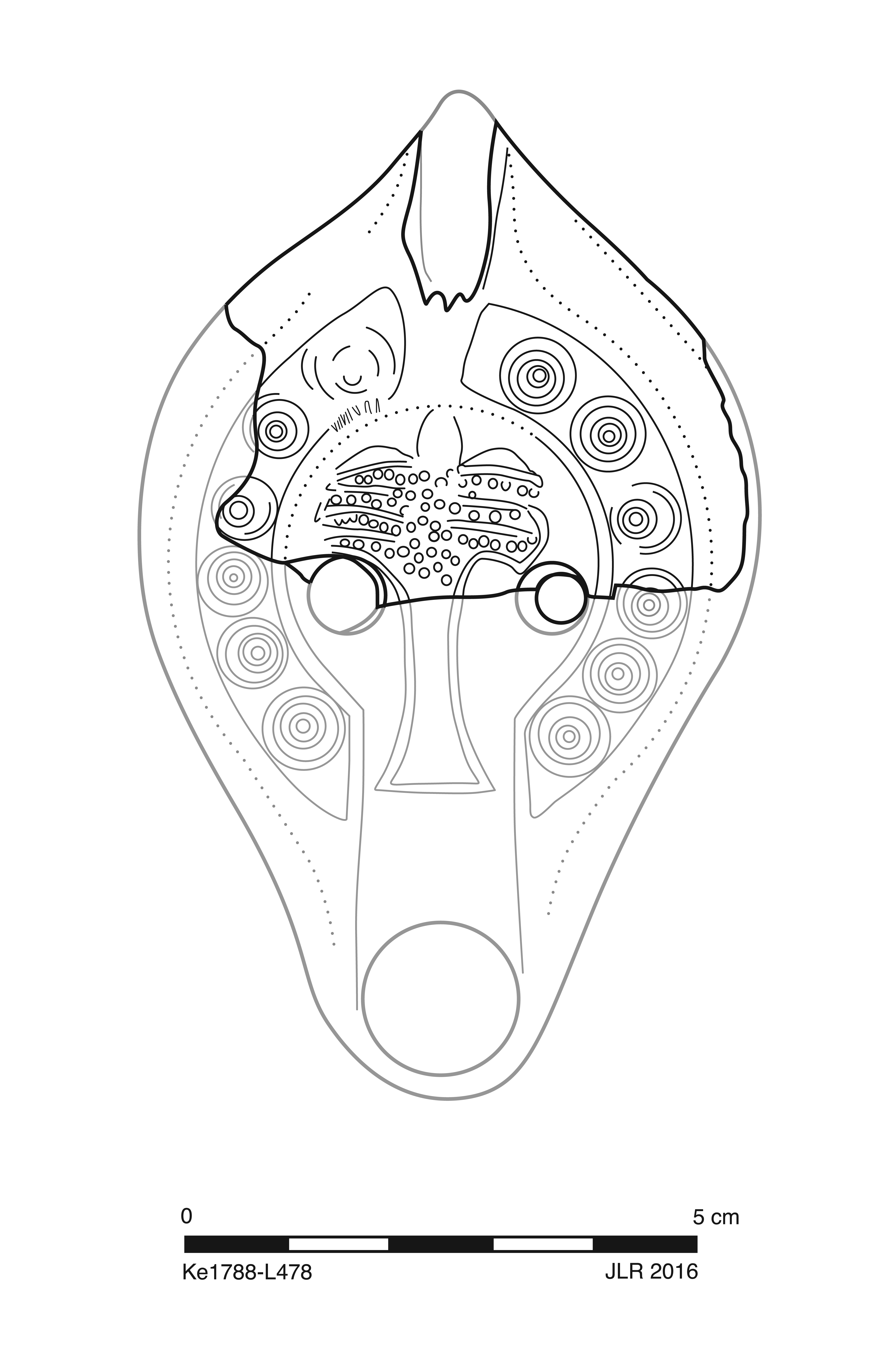
Fingerprints across walls and uneven smoothing. Motifs on shoulder surrounded by raised outlines, sometimes clay blobs; discus relief is large and simple, at variable depths. All this indicates sloppy technique and no careful cleaning of motifs in plaster mold before impression. Area within base ring scratched out in plaster mold before impression, leaving streaks like irregular gashes.
Bonifay lampe type 68 (‟décors à contours saillants et/ou se chevauchant”)
Comparanda
Motif: sim. Delattre1880, pp. 22-24, no. IX (Carthage)
Comparanda
Motif: sim. Selesnow1988, p. 160, no. 256, pl. 35 (Liebighaus Museum Alter Plastik, Frankfurt)
Comparanda
Popular motif in regional copies: sim. CorinthIV.2, pp. 289-290, nos. 1492-1500, pl. XXII (O. Broneer)
Comparanda
cf. Athenian copy: AgoraVII, pp. 176-177, no. 2425, pl. 39 (J. Perlzweig)
Fabric, firing, surface
Brown fabric with a tinge of red, consistently fired; hard, dense, somewhat fine, mostly smooth to vaguely conchoidal break, with uneven and sparsely pitted surface; rare to uncommon, poorly sorted, tiny to small, tabular and subrounded mostly white (calcareous) inclusions, some spalling, and rare, tiny dark (gray and red?) bits. Late Roman Athenian lamp fabric (strong red; rather fine; smooth to granular break), firing (hard), and surface (orangish red, uneven, semiglossy slip brushed irregularly across top and sides). Reddish brown slip, dull, thin, somewhat uneven applied, peeling in large flakes, unevenly distributed and mostly on upper surface. Northern Tunisian.
Preservation description
One large sherd preserve ca. 50% from back of lamp, including large portions of discus, base, and shoulder and most of handle but missing uppermost part. Slight to moderate, extensive abrasion; worn breaks; scattered, thick specks to small patches of encrustation on all surfaces.