- Locus TRA0909-004 [permalink]
- Type
- Locus
- In excavation trench
- Trench A-09-09
- Logical part of
- Loci
- Published as
- Rifeetal2022, p. 46
- Contents of Unit
- BUILDING MATERIALS. Stone (4 frr., 0.10 kg): 2 Pentelic (p.L. 0.048, Th. 0.010; p.L. 0.069, Th. 0.012); 1 Proconnesian with 1 fascia (p.L. 0.044, Th. 0.011); 1 bluish gray schistose marble with 1 rounded edge (p.L. 0.038, Th. 0.015). Mortar/plaster: 7 frr., 1.10 kg. Tesserae (13): 8 white, 2 black, 3 orange. Tile/brick: 114 frr., 13.
- Contents of Unit
- LAMP. (3 frr., 0.010): 2 Broneer XXVII body; 1 Athenian late unglazed body.
- Contents of Unit
- POTTERY. Byzantine (3 frr., 0.026 kg): 1 rim: Green and Brown Painted-ware bowl with pointed lip (est. Diam rim 0.200), upper exterior has thin, horizontal, painted brown to black lines, and clear glaze, interior has white slip and green glaze extending over rim (late 12th century); 1 body: exterior has white slip, interior has dark red and brown glaze (12th–13th century); 1 body: exterior and interior have white slip and yellow glaze (12th–13th century).
- Contents of Unit
- POTTERY. Greek (4 frr., 0.047 kg): 1 Corinthian fine ware (open-shape body); 3 Corinthian A/A′ amphora.
- Contents of Unit
- POTTERY. Roman (1,035 frr., 13.44 kg): standard colluvial assemblage.
- Contents of Unit
- SMALL FINDS. Glass (10 frr.): 1 body, dark yellowish orange (brown); 1 body, light green, thick; 1 body, greenish colorless, thin; 1 body, blue; 2 body, light blue; 2 base, blue (folded, tubular ring base); 1 base, light blue (folded, tubular ring base); 1 base, colorless base (concave bottom).
- Contents of Unit
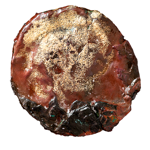
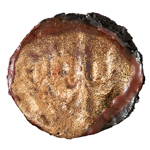
- SMALL FINDS. Metal: 3 total: 1 lead strip: sinker, shim or patch? (KM259); 1 fr. bronze nail shank (p.L. 0.036, Th. 0.004); 1 fr. iron nail shank (p.L. 0.063, Th. 0.006). Coin: bronze coin of Corinth (ca. 375–368 B.C.E.; KC078).
- Explanation of deposition
- Massive Early Byzantine sediment filling passageway.
- In Deposit or Stratum
- Koutsongila Deposit A4
- Location in unit
- Middle level of fill in south passageway on south Koutsongila Ridge.
- Uninventoried Type Present
- http://server/unset-base/undefined
- Uninventoried Type Present
- Brick
- Uninventoried Type Present
- Broneer Type XXVII Lamp
- Uninventoried Type Present
- Corinthian Type A Amphora
- Uninventoried Type Present
- Late Roman Athenian Lamp, late unglazed (“postglaze”)
- Uninventoried Type Present
- Nail
- Uninventoried Type Present
- Tessera(e)
- Uninventoried Type Present
- Tile
- Uninventoried Type Present
- Unclassified Architectural Decoration
- Uninventoried Type Present
- Unclassified Byzantine Glazed Pottery
- Uninventoried Type Present
- Unclassified Glass
- Uninventoried Type Present
- Unclassified Mortar/Plaster
- Uninventoried Type Present
- Unclassified Pottery