- Locus TRA0909-006 [permalink]
- Type
- Locus
- In excavation trench
- Trench A-09-09
- Logical part of
- Loci
- Published as
- Rifeetal2022, p. 47
- Contents of Unit
- BUILDING MATERIALS. Stone (7 frr., 0.19 kg): 2 bluish gray schistose marble (p.L. 0.090, Th. 0.009; p.L. 0.010, Th. 0.009); 1 Pentelic (p.L. 0.040, Th. 0.016); 3 white marble chips. Lapis lacedaemonius (KA070). Tesserae (6): 5 white, 1 red. Tile/ brick: 309 frr., 35.70 kg.
- Contents of Unit
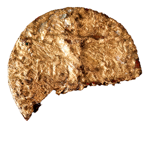
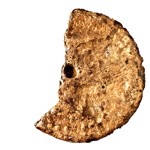
- COIN: tetrachalkon of Patras (ca. 40 B.C.E.; KC079).
- Contents of Unit
- LAMP. (5 frr., 0.020 kg): 2 Broneer XXVII: 1 shoulder (ovules), 1 handle; 1 Athenian early unglazed shoulder (vine?); 2 unknown body.
- Contents of Unit
- POTTERY. Byzantine (3 frr., 0.028 kg): 1 body: interior has green glaze (12th century); 1 rim: bowl with pointed lip and vertical rim (est. Diam. 0.100), exterior and interior have white slip and yellow glaze (12th-13th century); 1 body: exterior and interior have white slip and yellow glaze (12th-13th century).
- Contents of Unit
- POTTERY. Greek (11 frr., 0.049 kg): 7 Corinthian fine ware (1 bowl rim; 1 cup handle; 4 open-shape body; 1 closed-shape body), 3 Attic fine ware (1 plate rim; 1 kylix base; 1 open-shape body), 1 Corinthian coarse ware (lekane body).
- Contents of Unit
- POTTERY. Roman (971 frr., 13.43 kg): standard colluvial assemblage, date range to Late Roman. ESA, Knidian gray-ware cup, Early Roman lead-glazed cup (KP254), ESC, eastern thin-walled ware, African red slip, LRC; slipped folded-rim bowl; unslipped pitcher; basin/jar; cooking ware, including NePcf Late Roman cooking pot, saucer lid; Campanian, Dressel 2-4, MRA3, LRA1, LRA2, combed amph.
- Contents of Unit
- SMALL FINDS. Glass (14 frr.): 1 rim, colorless (inwardly folded, tubular lip); 1 body, yellow; 5 body, light blue; 6 body, colorless; 1 base, yellowish green (folded, tubular ring base).
- Contents of Unit
- SMALL FINDS. Metal: 6 total: 3 nonjoining frr. bronze nails shanks (Type I/II; p.L. 0.035, 0.034, 0.024, Th. 0.003–0.006); 1 fr. bronze nail (Type VI; KM288); 2 frr. iron nails shanks (p.L. 0.053, 0.025, 0.004–0.008).
- Explanation of deposition
- Massive Early Byzantine sediment filling passageway on south slope of ridge.
- In Deposit or Stratum
- Koutsongila Deposit A4
- Location in unit
- Fill in south central passageway.
- Uninventoried Type Present
- Basin, Bin, Pail, or Tub
- Uninventoried Type Present
- Brick
- Uninventoried Type Present
- Broneer Type XXVII Lamp
- Uninventoried Type Present
- Campanian Amphora, Unclassified
- Uninventoried Type Present
- Cooking-Ware Lid
- Uninventoried Type Present
- Dressel 2-4 Unclassified
- Uninventoried Type Present
- Jar
- Uninventoried Type Present
- Knidian Gray Ware
- Uninventoried Type Present
- Late Roman Amphora 1
- Uninventoried Type Present
- Late Roman Amphora 2
- Uninventoried Type Present
- Late Roman-Early Byzantine Cooking Pot
- Uninventoried Type Present
- Middle Roman Amphora 3
- Uninventoried Type Present
- Middle Roman Athenian Lamp, unglazed
- Uninventoried Type Present
- Nail
- Uninventoried Type Present
- Pitcher or Jug
- Uninventoried Type Present
- Regional Sigillata
- Uninventoried Type Present
- Tessera(e)
- Uninventoried Type Present
- Tile
- Uninventoried Type Present
- Unclassified African Red Slip
- Uninventoried Type Present
- Unclassified Architectural Decoration
- Uninventoried Type Present
- Unclassified Byzantine Glazed Pottery
- Uninventoried Type Present
- Unclassified Cooking Ware
- Uninventoried Type Present
- Unclassified Eastern Sigillata A
- Uninventoried Type Present
- Unclassified Eastern Sigillata C
- Uninventoried Type Present
- Unclassified Eastern Thin-Walled Ware
- Uninventoried Type Present
- Unclassified Glass
- Uninventoried Type Present
- Unclassified Lamp
- Uninventoried Type Present
- Unclassified Late Antique Combed Amphora
- Uninventoried Type Present
- Unclassified Late Roman C Ware
- Uninventoried Type Present
- Unclassified Pottery